Affiliate marketing has been popular on the internet for quite some time, but dropshipping is quickly catching up. There are dozens of similarities between these two online income methods, but they’re more different than you might think. You can do both of them at the same time, but it’s better to focus your attention on one or the other.
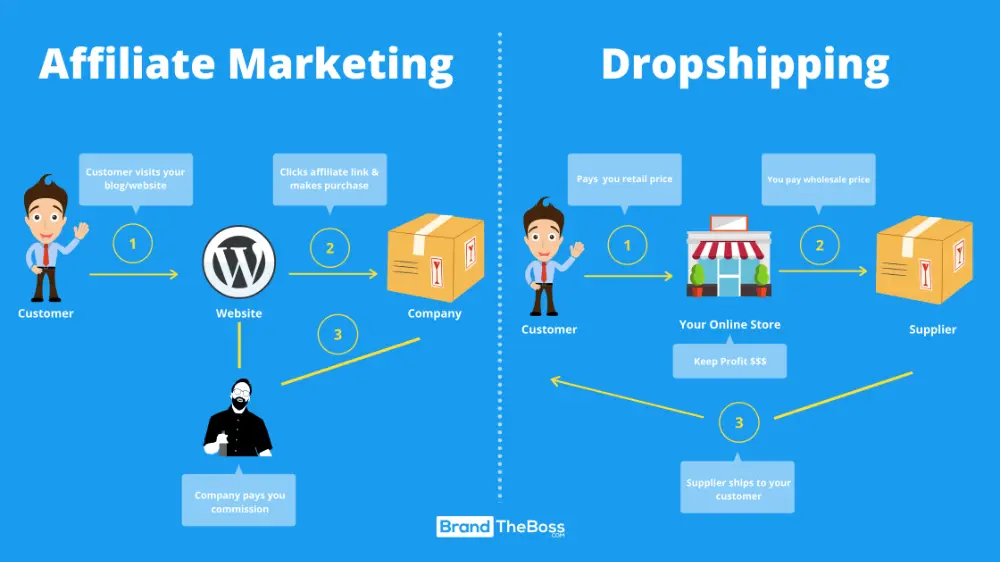
When it comes to affiliate marketing vs. dropshipping, affiliate marketing allows you to sell other companies’ products through links, while dropshipping entails selling your products through other companies. You can dropship on Amazon’s store or use the store for affiliate links from your website.
Throughout this article, you’ll also learn the following info about affiliate marketing vs. dropshipping:
- Various differences between these two online money-making methods
- A few similarities that you should know about
- How to choose between dropshipping and affiliate marketing
What Are the Differences Between Affiliate Marketing and Dropshipping?
There are all sorts of differences that separate these two methods. You might be great at one and not so good at the other. Thankfully, you’re in the right place to view how they differ to compare the info with your strong suits.
Here’s a list of five differences between these entrepreneur methods:
- As suggested by Oberlo, dropshipping allows you to set the prices of your products, whereas affiliate marketing has no control over the pricing. Instead, it’s set by the company that you’re selling through. For example, you could link to a product, and the company will be able to alter the price whenever they want.
- Affiliate marketing is often done on other platforms, whereas dropshipping can be done right from the online store. As a drop shipper, you can sell your products on Amazon’s store, but you can’t put affiliate links on the store. Instead, you’ll have to set the links on other websites, including blogs, forums, or social media.
- You’ll get more profit per sale as a drop shipper than you would as an affiliate marketer. Dropshipping usually only charges you for the cost of the base product and shipping, whereas affiliate marketers often get a commission from 5% to 50% of the sale. Drop shippers can sell a product for $15, even though it only costs $5 to make.
- There’s a whole lot more busy work in dropshipping than affiliate marketing. As an affiliate marketer, you have to post the links in various places, as previously mentioned. However, drop shippers have to plan how much of each product they can purchase to sell, deal with returns, and keep customers satisfied.
- Dropshipping allows you to have a business name on your products. You can paste your logo on the side of shirts, yoga mats, coffee mugs, or whatever else you want to sell. On the other hand, affiliate marketing doesn’t give you any room for business marketing or brand logos on anything.
As you can see, there are plenty of noticeable differences that might make you prefer one over the other. Dropshipping is a lot more work, but the profits can be significantly higher than affiliate marketing. However, affiliate marketing eventually generates passive income, which is often thought of as the goal of online work.
If you want to see a handful of similarities, then proceed to the next section.
How Are They Similar?
Despite their obvious differences, affiliate marketing and dropshipping are more alike than you might think. They both require an internet connection and a reliable device (laptops, desktop computers, smartphones, and tablets all work), but there’s much more to it than just that.

Let’s review the similarities below.
- Both jobs are reliant on another company for operation. If you want to dropship, there’s a good chance that you’re going to be working through Amazon at some point. You’ll be able to post your products on their store. Affiliate marketing also goes through other companies for a commission, with Amazon being the leader in the industry.
- According to Affise, affiliate marketing and dropshipping both require you to market the products. If you want to generate sales, you’ll need to bring customers to the products or links that you’re posting. In both cases, no traffic means no sales. You’ll need to brush up on social media and SEO if you want decent results.
- Neither of them will bring you money overnight. You have to put in countless hours of hard work if you want to generate a reliable source of income. It’s all about focusing on building traffic to the products and links if you have a vision of success. Again, there are plenty of traffic-generating tools at your disposal.
- You’d benefit from having a background in sales in both fields. Dropshipping is 100% up to you to create an appealing description, high-quality photos, and reasons that your product is better than others. Affiliate marketing requires you to grab the attention of the reader to make them want to click the link and buy the product.
- If you’re looking for the best long-term results, then making a website will be the quickest and most reliable method. Drop shippers can convince their viewers to check out their products and subscribe to email lists, whereas affiliate marketers will have a platform to post their links and reviews whenever they want to.
Which One Should You Choose?
Now that we’ve broken them both down in detail, it’s time for you to decide which of the two is the best solution for you. Dropshipping might sound appealing for the business aspect, but affiliate marketing has so much less responsibility. To better assist you in the decision-making process, review the questions and answers below.
Do you have a lot of money to put down on the business?
If so, then dropshipping is a possibility. Affiliate marketing can be virtually free, but dropshipping requires you to buy the products in bulk right away. In most cases, you should expect to spend a bare minimum of $500 to $2,000 on the first batch of products. You’ll get hundreds of items to sell, but it’s still a notable payment right off the bat.
Are you comfortable dealing with customers?
As suggested by Cloudways, customer complaints can be an issue with dropshipping. As an affiliate marketer, you don’t have to worry about feedback and other problems on that side of the business. However, a few bad reviews at the start of your journey as a drop shipper can be a massive setback.
Do you have knowledge of online business work?
If not, then you might want to start out as an affiliate marketer. You don’t have to spend any money right away, and you’ll be able to understand what makes people want to click and buy. Once you get a grasp of the business flow, you can create appealing designs, descriptions, and other details as a drop shipper.
Conclusion
Dropshipping and affiliate marketing are both exciting ways to make money online. If you’re motivated and ready to put in a lot of work for a massive reward in a few months or years, then you’ll succeed in either field.
Remember that passive income and full-time pay can take quite a while. If it were too easy, then the system would change, or everyone would saturate the market. You need to be willing to work hard for no pay at all until you start getting traction with either business.
By creating a website, advertising your products/blog on social media, mingling in the forums, and making a YouTube channel to shout yourself out, you can drastically increase your chances of success.
Did This Help You? If so, I would greatly appreciate it if you commented below and shared on Facebook

Mike Garvey JrFounder of BrandTheBoss.com
Get Started Online
Want to learn how to start an online business and work from home like I do?
Affiliate Disclaimer: We hope you liked this article. Please note that some of the links inside this article may be affiliate links. That means that if you click on one of the links and sign up, I may be compensated for it. If you do happen to click, I really appreciate it! Any money made keeps this site running smoothly and allows me to keep writing these high-quality reviews.